
“I don’t think I’ll ever feel secure at any job again.“
That’s from a thread on r/jobs I’ve been reading for the last couple of weeks. It’s not an outlier. I’ve now read hundreds of comments from people working through knotted emotions around job obsolescence, losing meaning, feeling like a “meat proxy” in steering AI.
“I’m scared, I fear my career may have just come to a screeching halt.“
“Lately for the past year I’ve been super depressed knowing that the end is near for the industry.“
One person described grinding their teeth in their sleep. Another wrote that employees are now seen “as a liabilty to be replaced with AI as soon as practical.”
People are scared and I think I’m uniquely positioned to do something about it.
Anyone can build now
I’ve taught 22 people to build with AI in my vibecoding course. All 22 shipped a working app.
Some of those changed lives. Ramin had an idea for a health app he could sell to enterprises and he took my course, vibecoded a proof of concept, raised a pre-seed round and is now off to the races with Healthy Canary. Shannon had an app idea sitting on his to-do list for as long as he can remember built on material from a mentor, a doctor friend who has since passed. In the course he finally built it and launched it in his friend’s honor.
William had managed multiple tech projects that never got finished, and had never written a line of code. Here’s how he put it:
“You get past those first couple days and you realize this is just the best time to be alive.“
“Tech is so much of a creative. You’re an architect of whatever you want to build.“
He has since built Dynamic Event Suite, a tool to improve the efficiency of his own events business and then productized it and offered it to other event organizers struggling with dwindling event numbers to help them reinvigorate their events and maintain profitability.
Watch the student testimonials
Building things right is no longer the hard part. It’s now a matter of building the right thing.
These students above knew their fields deeply so they had the pre-existing audience and domain expertise to build the right thing based on previous experience. For the rest of us unless you have fought in the trenches alongside your prospects, you won’t have the degree of customer empathy necessary to serve them.
The hard questions
What do you build? Who is it for? How do you make something people will actually buy?
These are the real challenges my students wrestle with now that they know how to build. The vibecoding craze has democratized who can create software and lowered the bar for who can build software. And while this is amazing it’s like giving Promethian fire to people that don’t know what to do with it so they’re out scorching the countryside.
Why this matters right now
If these threads on Reddit and Hacker News are to be believed, society (starting with programmers) is now wrestling with a crisis of meaning and all the gnarly emotions that come from realizing the craft you spent a lifetime to hone is being performed better by machines.
The way to defend one’s relevance in this scenario is not to turn a blind eye and pretend it’s not happening. Nor is it to take the Luddite stance and chuck wrenches in the gears sabotaging data centers. Nor is it to pout around and complain online pining for the glory days of old. The way forward is to lean into the role change and immerse early in learning how to leverage these tools.
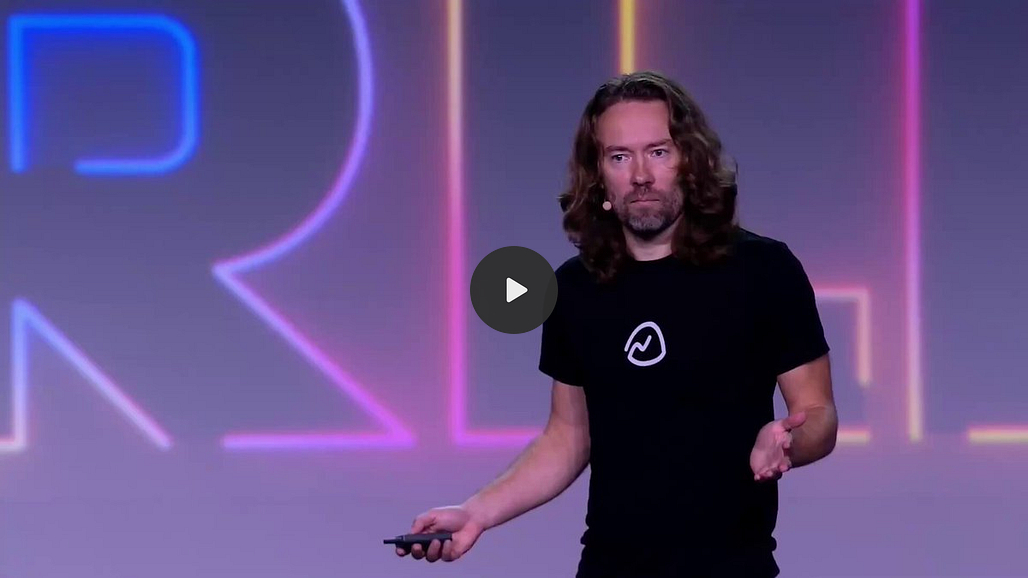
DHH gave this amazing talk recently framing it so eloquently. Watch all three minutes of this clip:

My thesis
The best way to learn anything is by diving in and getting your hands dirty with it.
Build a lifeboat using Agentic AI in the form of a cashflowing, passive revenue-generating side hustle that you can build up in your spare time and this becomes your insurance policy. Once you have it working you have max negotiating leverage and peace of mind.
Ironically in the process of building the lifeboat the skills you acquire are exactly the skills that make you the last one to be let go in a company. So not only do you have the fallback but you represent more value to your current employer.
One senior engineer in a thread about feeling obsolete put it plainly: “I’ve been showing my managers in different ways that I know more about AI than many people in the company.“ Another, 22 years in: “I was scared a year ago, I’m still uncomfortable today but at least now I’m in favorable position.“
That all sounds great Sean, but how?
There are time-tested entrepreneurial frameworks that have already proven themselves. They have Lindy having served entrepreneurs for decades. By stacking these and sequencing them in order we can leverage AI to assist with the grunt work and spend our time on the parts that truly need our judgment, domain expertise and taste.
That’s FounderOS.
What it is
A stage-gated system that draws inspiration from Amy Hoy and Alex Hillman’s 30x500, Steve Blank’s customer development, the Business Model Canvas, Infusionsoft’s lifecycle marketing and about a dozen other frameworks I’ve used over the years. Each step has a deliverable, and it coaches you until you get it right before you move on. You go at your own pace and it leads you from zero to hero.
There are a bazillion courses and programs and mastermind groups out there but I have yet to see the resource that pulls apart the best frameworks, agentifies them and leads you through a system self-serve with AI as co-pilot to reliably get to a winning result.
How it works (and how this post was made)
Everything quoted at the top of this post came out of FounderOS. I picked an audience (people worried about their jobs in the age of AI), found the threads where they were congregating, and ran them through the system: 25 threads, over 13,000 notes on what they struggle with, what they fear, how they are dealing with it. A process which would have taken months of reading and analysis pre-LLM can now be done in days with the right tooling.
Start with people, not an idea. Pick an audience you want to serve.
Go where they talk. Observe the communities and read the conversations already happening there.
Make sense of it all. Fears, dreams, what they buy, their vocabulary. The LLMs do what they’re good at: chewing through huge piles of text, finding patterns, surfacing clusters.
Help first. Speak to them in their own words and give away small, useful fixes. That builds trust and starts conversations.
Map it all onto a Business Model Canvas. This is your overhead map of all the physics of the business and how you navigate and perform experiments.
Own your real estate. That content lives on your blog, so the equity builds up with you: SEO, and now AEO and GEO too. You get a reliable fountain of highly-calibrated educational content.
Let the product emerge from analyzing all those conversations. All the insights from digging into what people are saying and reading between the lines then aggregating it across threads and formulating and testing hypotheses.
You still need to read (a TON) and load up the ultimate computer (your brain) with the source material but at this point we have LLM’s to assist with the grunt work of finding and surfacing insights.
You retain agency: the direction, the hypotheses, the vision, your own personality in the messaging - the system surfaces the opportunities and proposes avenues to explore. You still have to walk the avenues but the result is a level of customer empathy and depth of understanding that emerges organically from the market vs. you imposing your idea on the market. It avoids the doom loop trap of endlessly pivoting, duct-taping and product-market-fit retrofitting to preserve the thing you built instead of building the right thing from the start.
Is it finished?
No. Reid Hoffman famously said: “If you are not utterly embarrassed by the first version of your product, you’ve launched too late.”
FounderOS is embarrassingly early, but it’s to a stage where I’m now using it myself so it’s time to invite a select few to begin trying it.
What happens on November 5th
I’m unveiling FounderOS for the first time to the people in the room at this event. We’ll take a volunteer and run FounderOS live from literally zero: find where they hang out, mine the threads, pull out the insights, write a first helpful piece of content.
People in the room get:
- A first glimpse at FounderOS and skip the waitlist
- €200 off the Agentic AI Mastery Weekend happening Dec 11 to 13 at DOMA in Mafra
Seats are capped at 50 and it’s free, but you need to RSVP to claim your spot.
If you’re not in Lisbon the event will be recorded and posted to the site. You can read more about FounderOS and join the waitlist here.
There is no better time to be building but only if you’re building the right thing. Let’s help you figure out what that is for your people and in the process of doing so give you both the lifeboat and the superpower that makes the lifeboat unnecessary.
-Sean